Mono
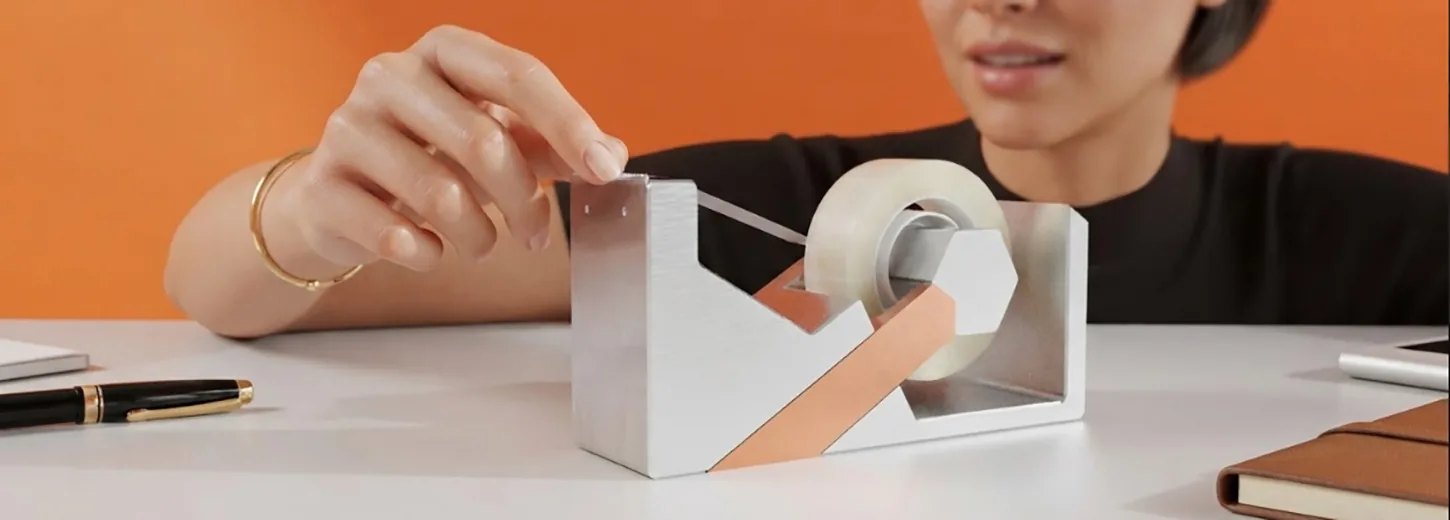
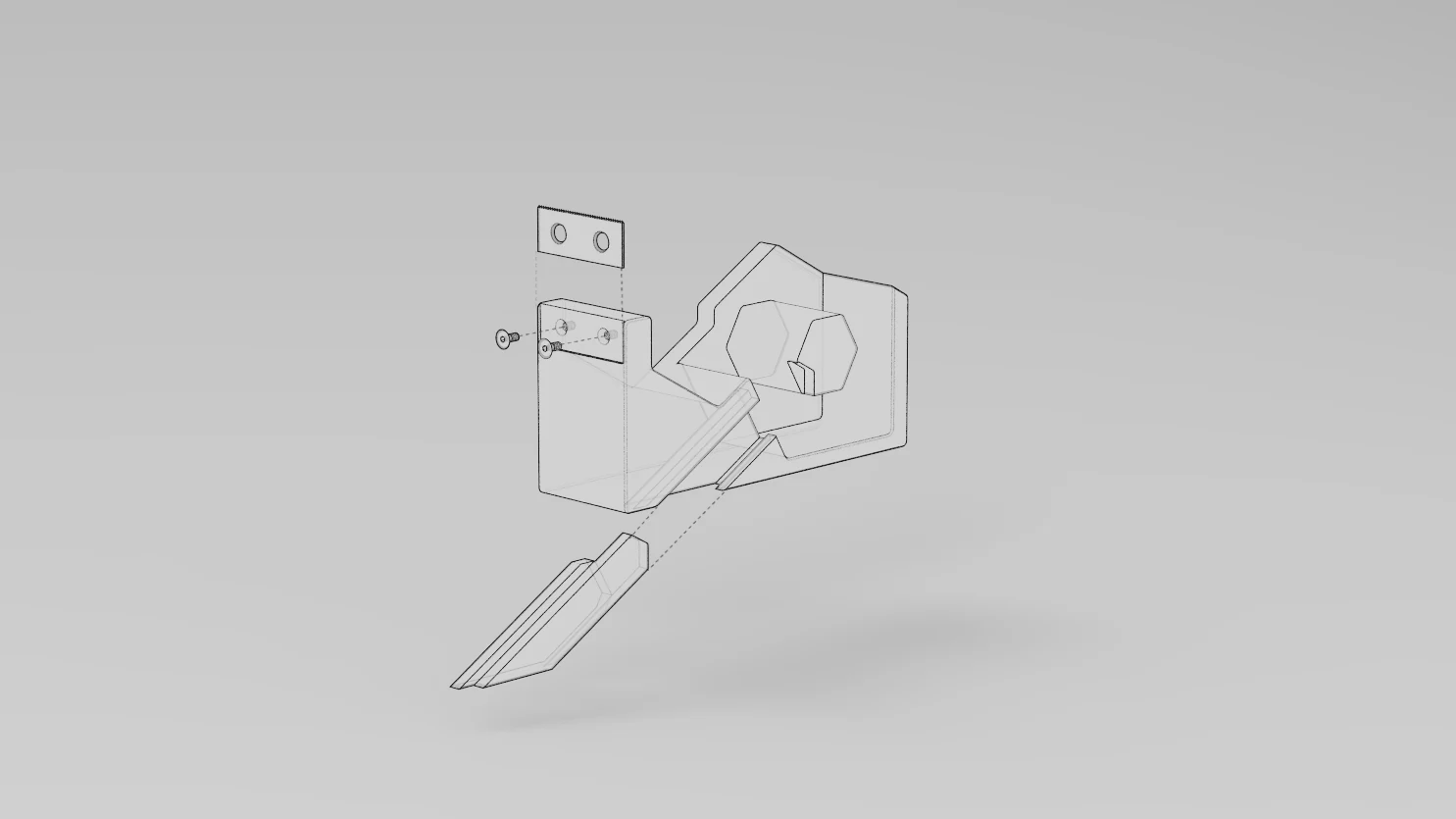
A unibody tape dispenser with an unscrewing blade and a tape arm that pulls out on a magnet.
An object nobody bothers to design
Most tape dispensers are plastic shells. The serrated edge is moulded in, the roll sits on a fixed axle, and once the blade goes blunt or the housing cracks, you buy another one. There's no margin in the category, and no client ever briefs it, so nobody treats it as a design problem. It's still on the desk and in your hand several times a day. We picked it up because nobody was asking us to.
The two parts that come off
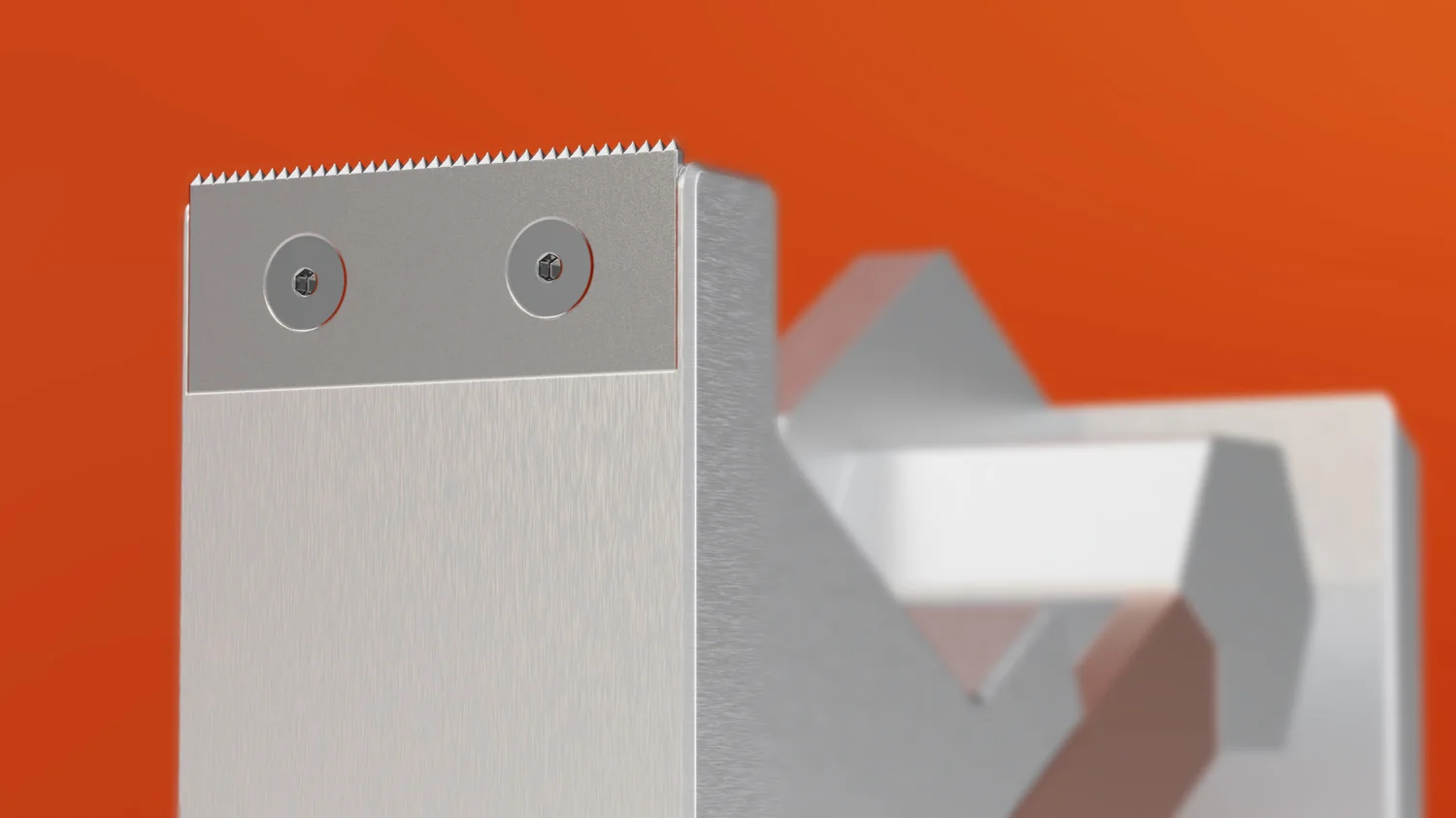
Mono is a unibody tape dispenser you can take apart and keep. The blade sits on two screws: back them out and swap it. The tape arm is held by a magnet, so a new roll takes one pull, not a wrestle with a stiff plastic axle.
The blade is the part that wears out on a tape dispenser. On Mono, it's built to come off.
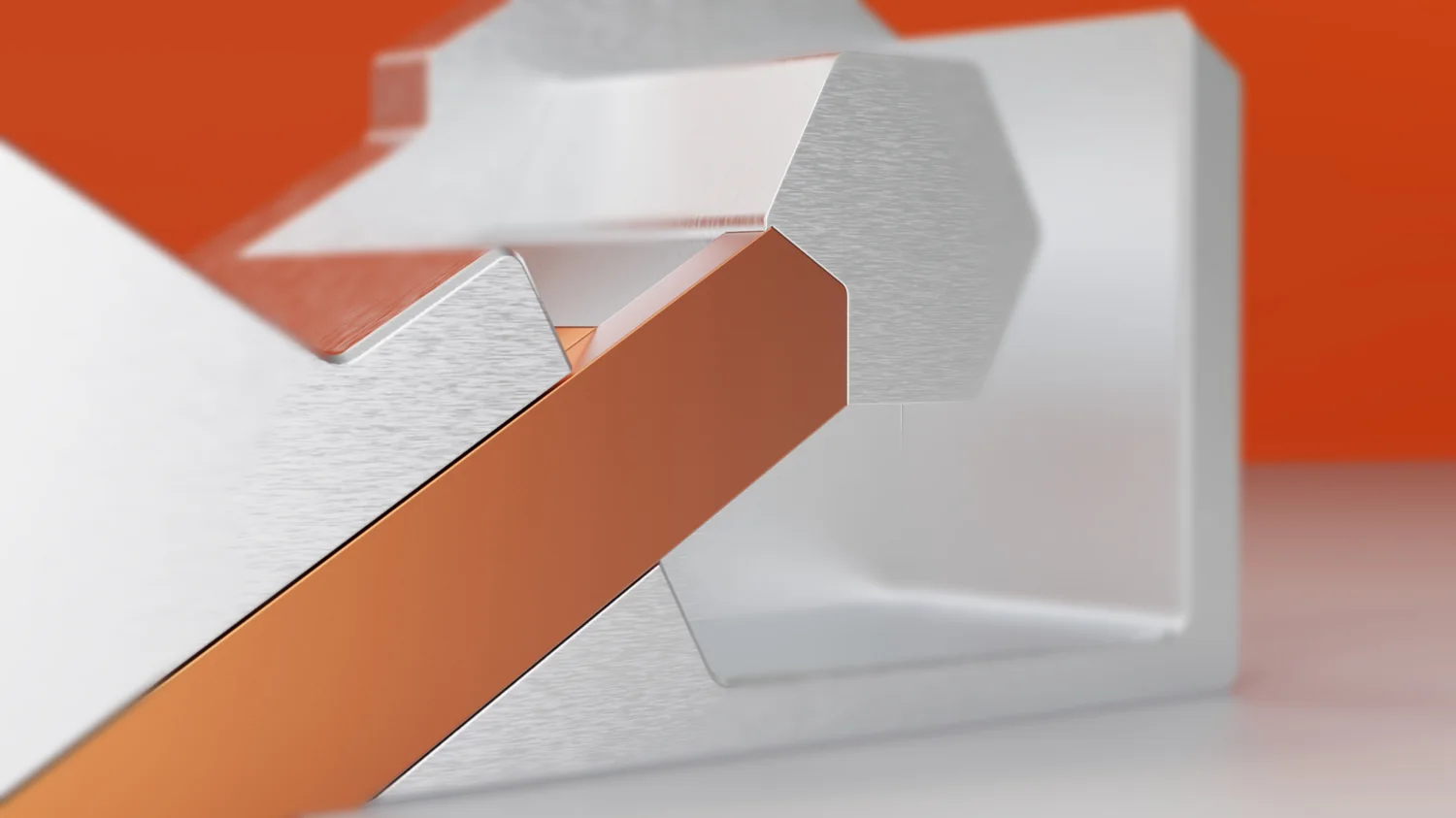
The arm is what you touch on every reload, so it's the part we anodised, an accent against an otherwise all-aluminium build. Its flat outer face is also the spot for a client logo, once there's a real client and an identity to put there.
Sized to a standard roll, milled from metal
The body is built around a standard tape roll. The blade screws onto a seat milled into the front lip, cut so a replacement drops in flush without shimming. The arm catches on two magnets in the shell and one in its own foot, spaced so it seats in the same spot every time. Where the anodised arm meets the brushed shell, the gap is a panel line, dimensioned on the drawings.
From sketch to manufacturer-ready
The early sketches were about access more than form: reaching the blade screws, and getting the arm past the roll on the way out. The CAD work then pulled the body and the arm onto one shared edge, so the join reads as a single line.
The drawing set is at the level we'd hand a factory on a paid job: every view dimensioned, ready to quote for tooling.
Why a project like this matters
A tape dispenser has no brand story and no spec sheet to hide behind, which makes it a fair test of how a studio actually works. Most small objects like this are built to be thrown away, not opened. We wanted to design one that comes apart, and take it far enough that a factory could quote it.
That's how we work on client projects too: the cheapest version to build is rarely the only one worth drawing. If you have an early concept and want it taken to the point a factory can price it, that's our expertise, and the rest of our work is here.
Questions About Mono
Because the cheap shortcuts are easiest to see on something plain. An everyday object lets us show how we approach manufacturing without a client brief in the way.
Two things you normally can't do on a desk dispenser. The blade is a separate part on two screws, so you replace the blade instead of the dispenser. And the tape arm is held by a magnet, so it pulls straight out to load a roll instead of fighting a fixed plastic axle.
No. It's a self-initiated Coffer Studios project. We took it to a full dimensioned drawing set rather than to market.
Hand sketching, SolidWorks for the CAD and the blade and arm mechanisms, KeyShot for the renders.
Wajahat Ali, founder and lead industrial designer at Coffer Studios.
More from the studio
Related reading
What Is CMF Design and Why It Decides Whether Your Product Looks Cheap or Premium
Colour, material and finish decisions are made on almost every product; most just aren't made deliberately. Here's what actually goes into getting them right.
The Prototype Mistake That Costs Founders $20,000 (And How to Avoid It)
The most expensive prototyping mistake isn't skipping a prototype, it's prototyping in a way that doesn't match production. Here's how to avoid it.
Have A Product Like This?
We respond to every serious enquiry within one business day.