
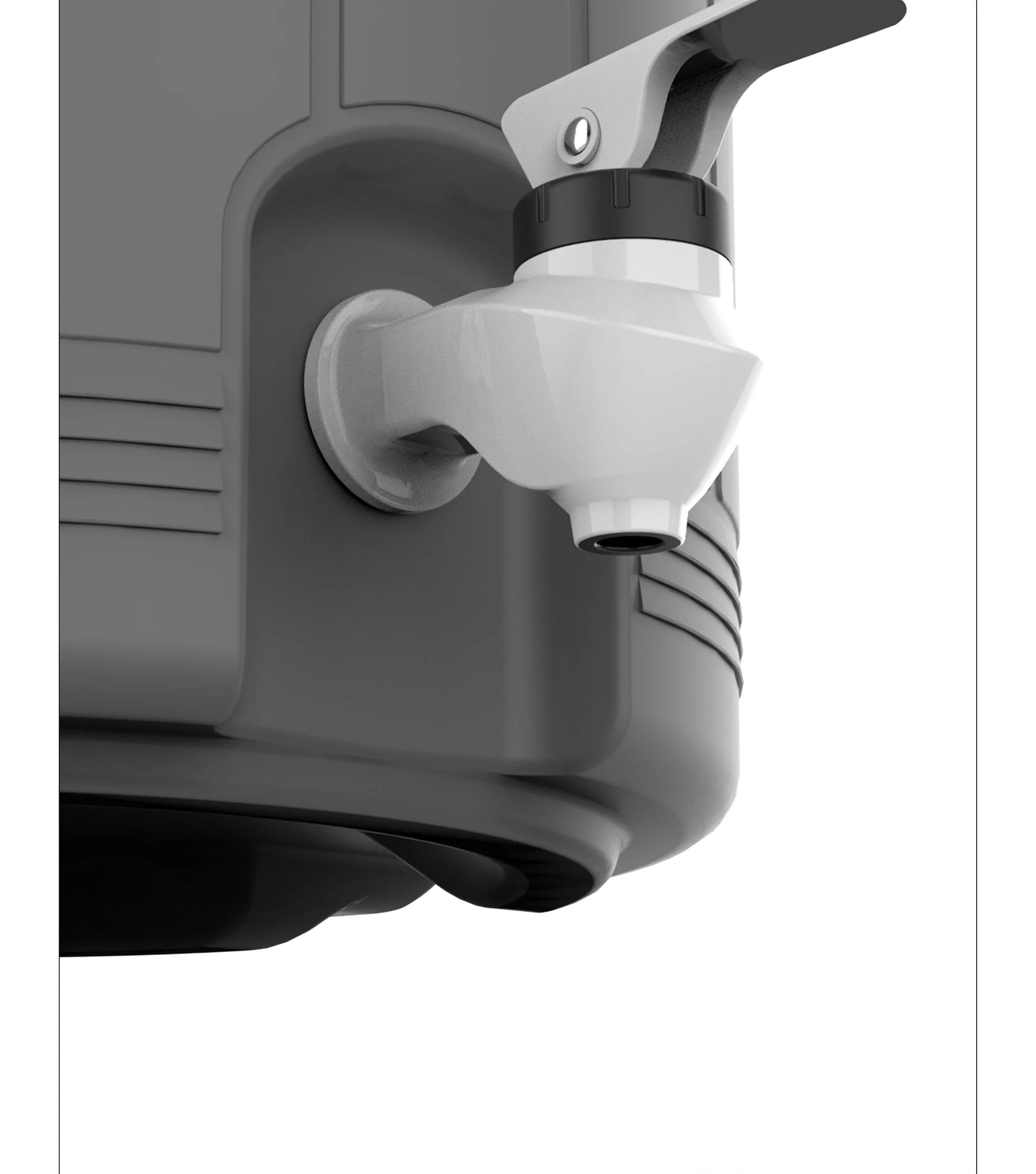
Sweep
A water dispenser tap redesigned for a cleaner, quieter pour.
An afterthought part
Most taps fitted to water dispenser containers, the cooler-style jugs used for drinking water, are treated as a commodity part: a loose plastic valve bolted onto the front, chosen for cost rather than feel. They drip, they rattle, and the lever rarely gives a confident, positive stop. Sweep set out to hold a dispenser tap to the same standard as a bathroom fixture: a mechanism that seals cleanly, operates quietly, and looks like it was actually designed rather than sourced from a catalogue.
Starting from the lever
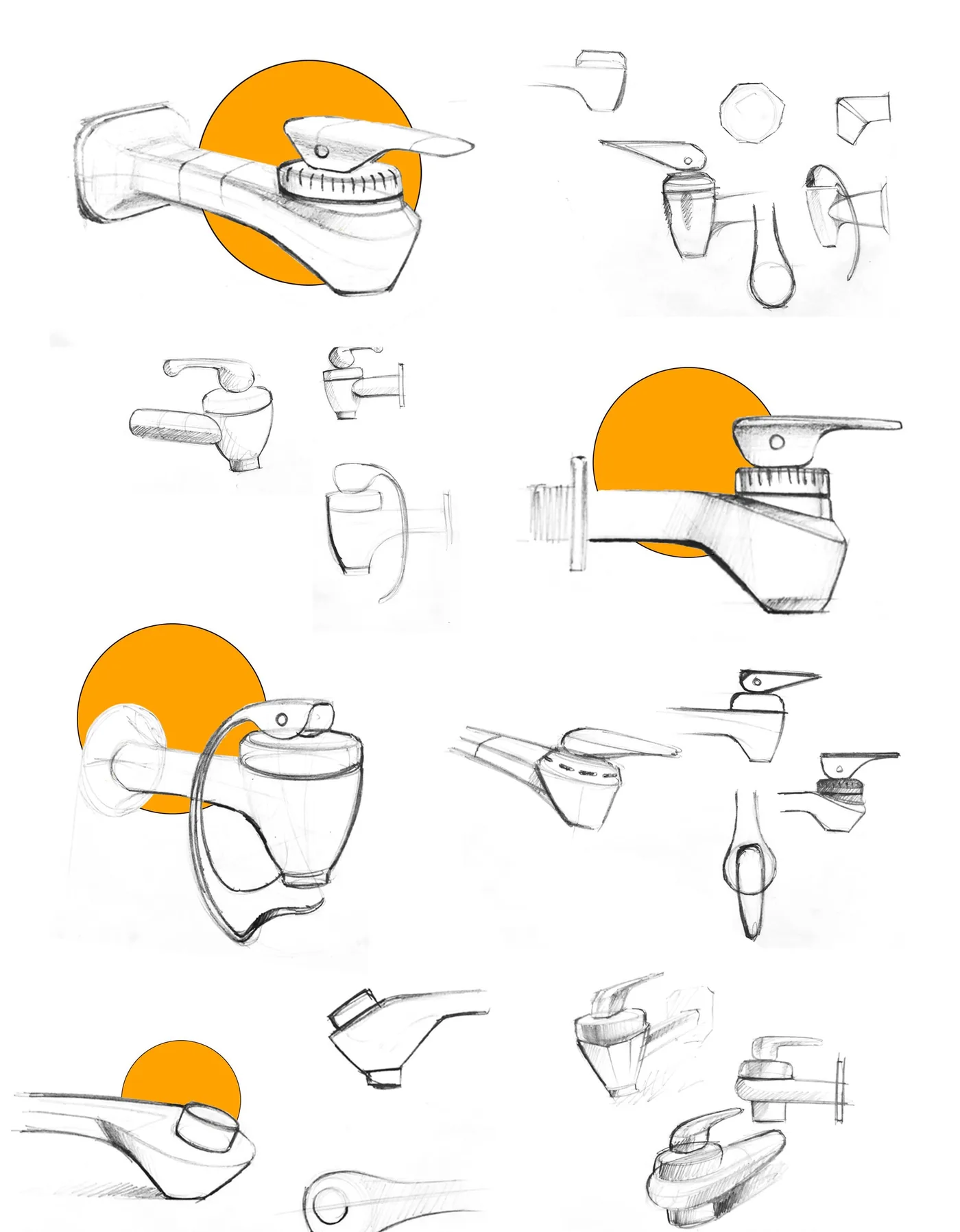
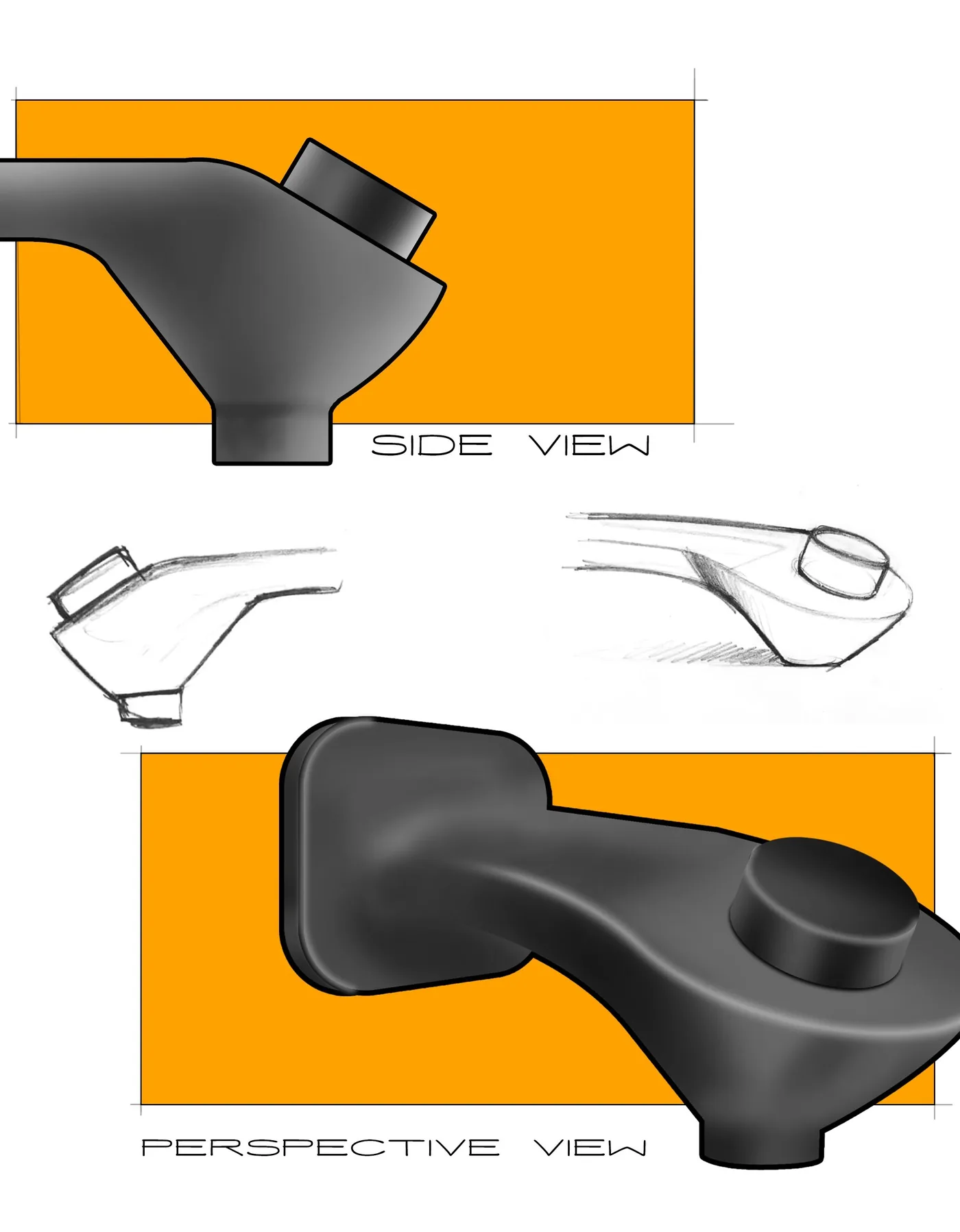
Every early sketch worked the same two questions from different angles: how does a hand find and grip the lever without looking, and how much of the mechanism should stay visible versus tucked away. Some explorations kept the classic ribbed collar of a traditional spigot, others wrapped the lever into a loop around the spout, others stripped it down to a single smooth knob. That range gave three genuinely different directions to carry forward, not three small variations on one idea.
Three directions, one winner
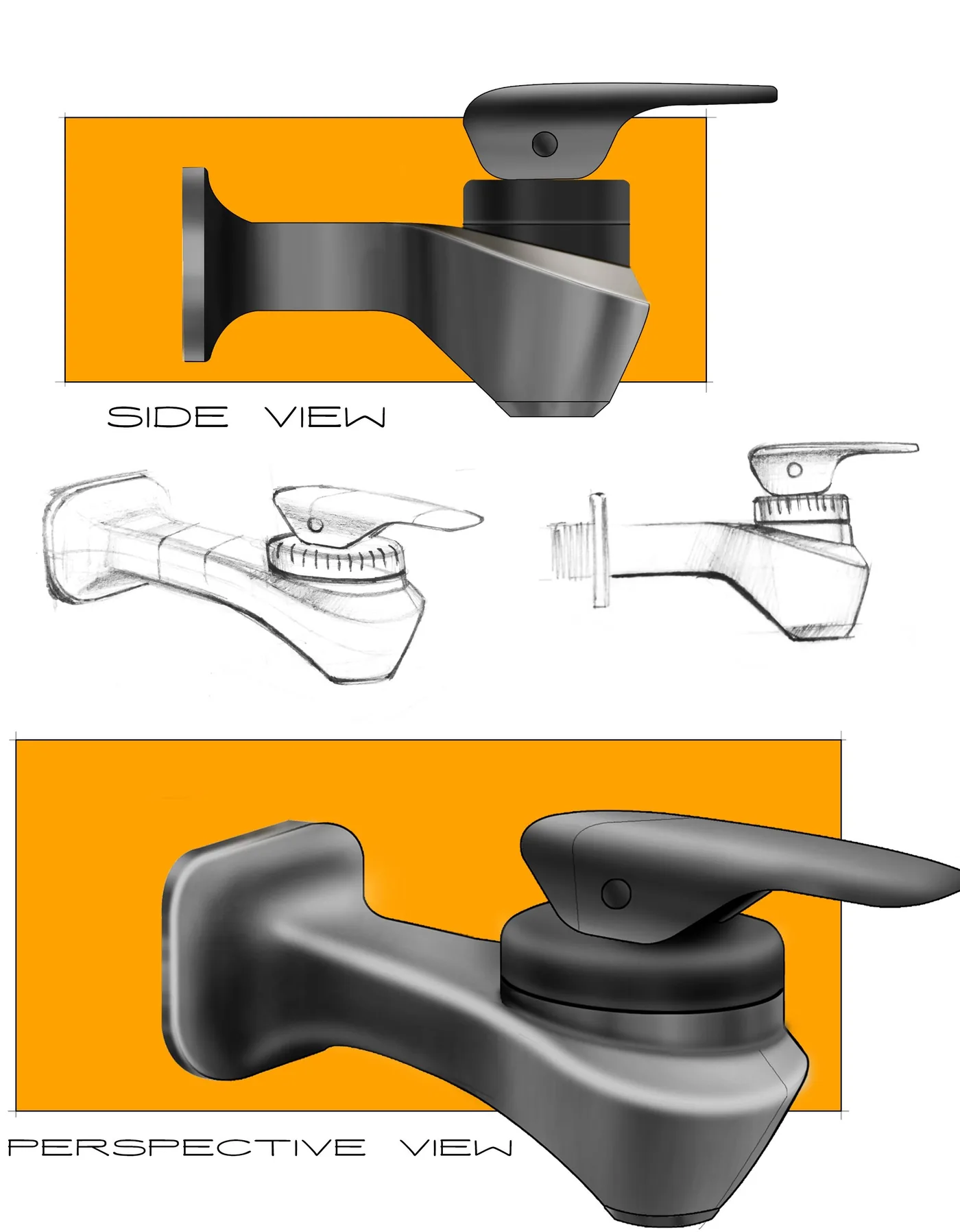
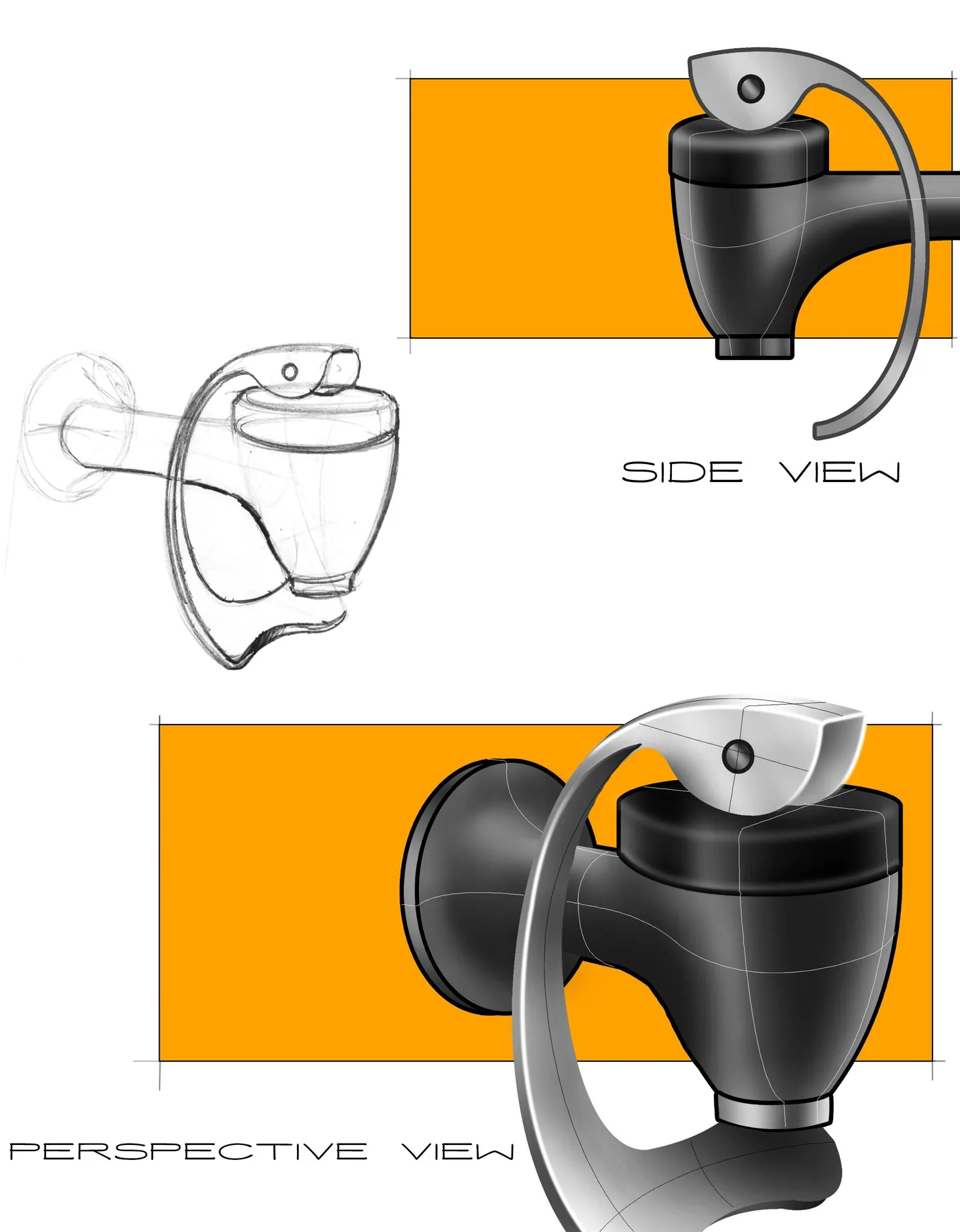
Option 1 kept a ribbed locking collar under a flat lever, closest to a spigot people already know how to use, just resolved properly. Option 2 wrapped the lever into a loop that circled back around the spout, more sculptural, but harder to mould as one clean part and no easier to grip. Option 3 went the other way entirely: a single smooth knob with almost nothing to hold onto. Option 1 won on the thing that actually mattered, a lever a hand finds instantly and turns with one motion, without giving up the mechanical presence expected of a tap.
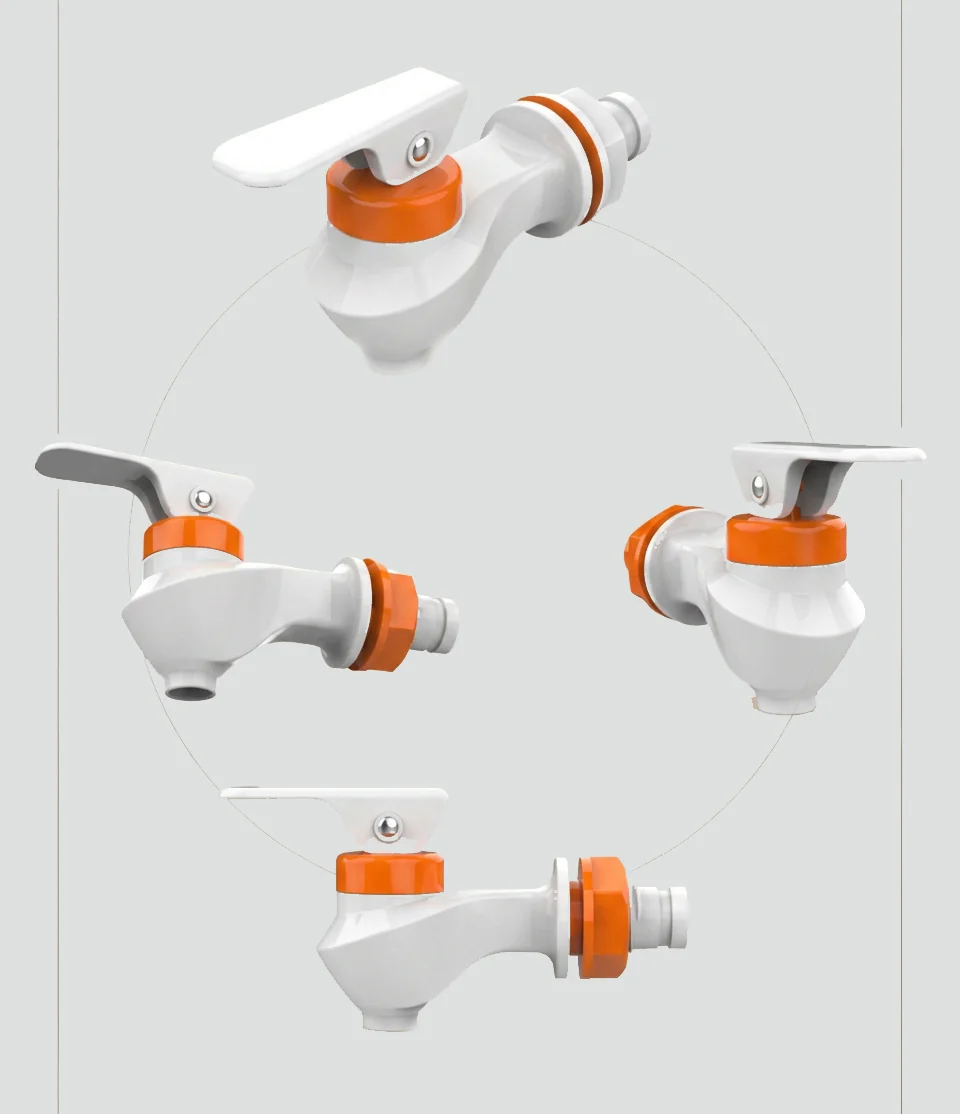
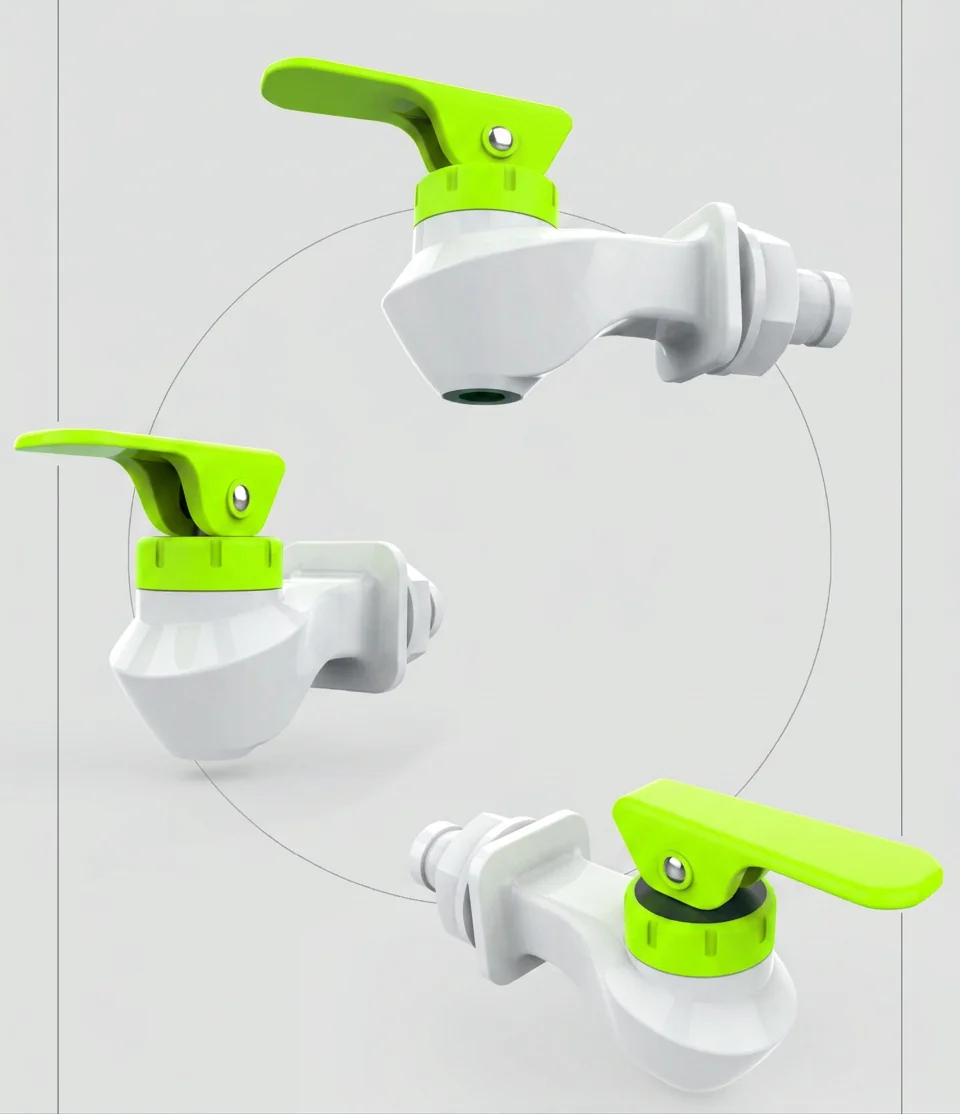
Proving it across colourways
Before locking the design, the refined Option 1 form was rendered in accent colourways well outside its eventual production white, a white body with an orange collar and lever, and a white body with a fluorescent green one, to check that the form still read clearly once the ribbed collar and lever weren't just riding on a neutral finish. A shape that only looks resolved in grey isn't actually resolved, it's just hiding behind the render.
Checked against the drawing, then the real thing
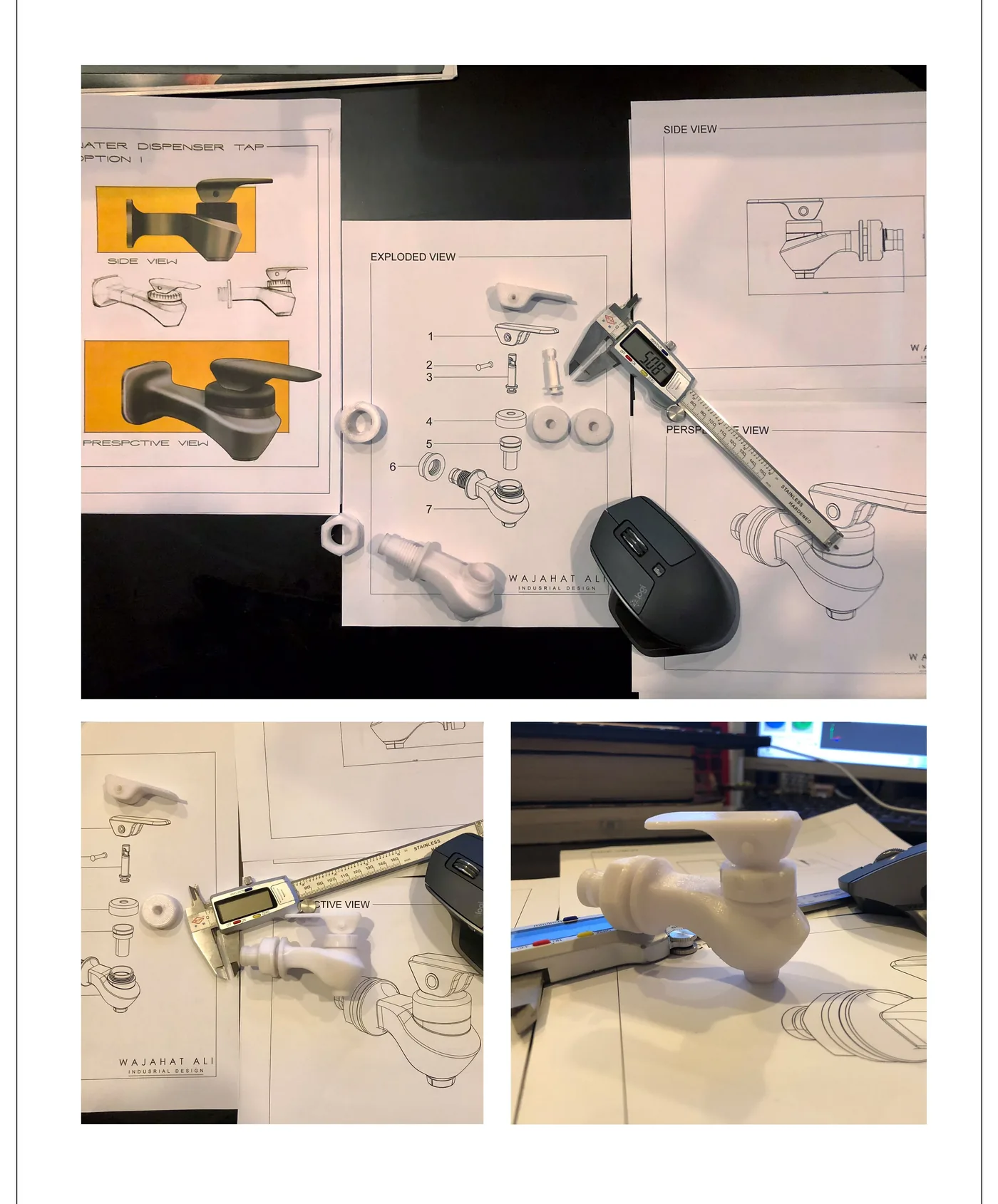
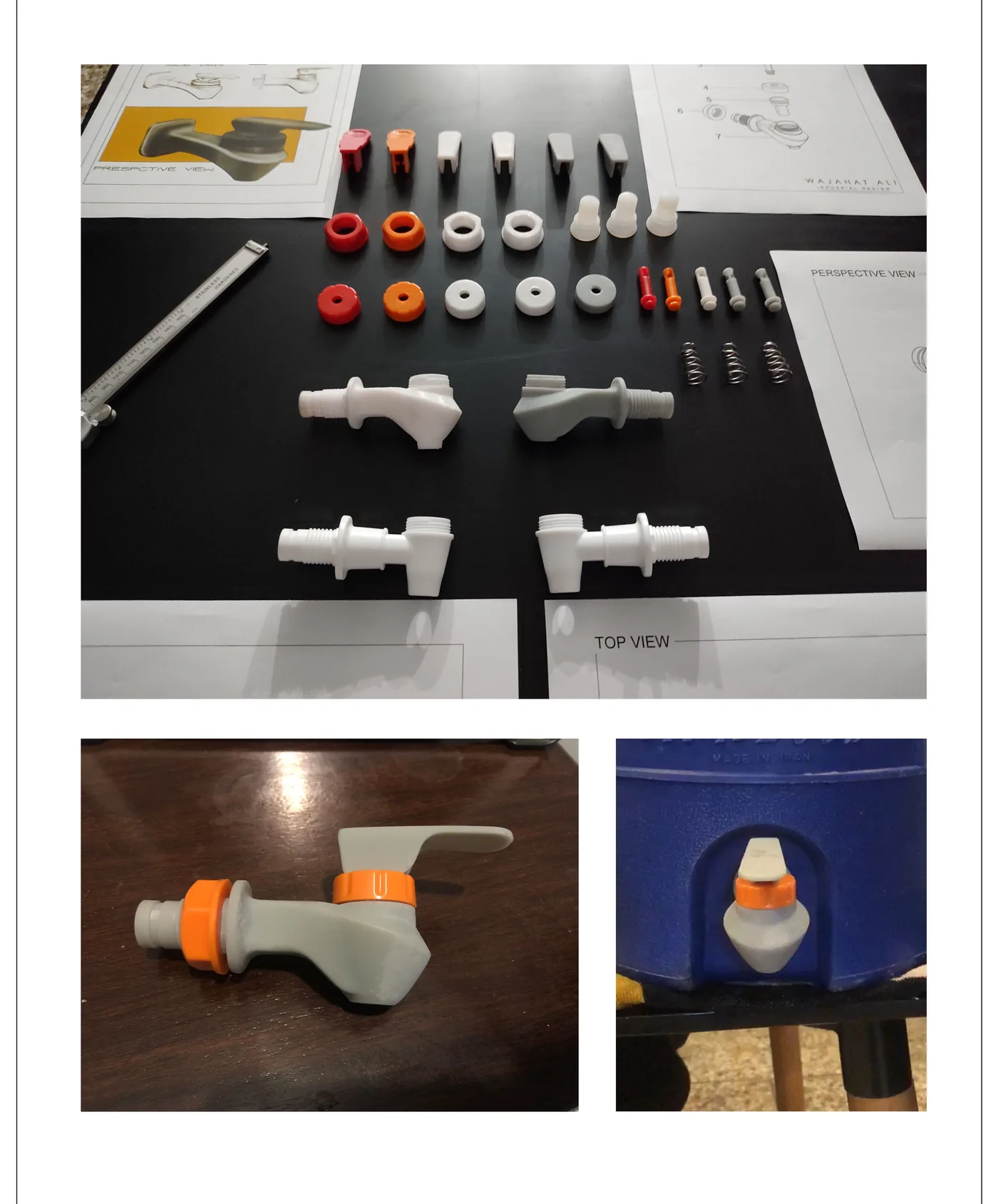
Every part, the lever, the valve stem, the locking collar, the gaskets and springs that give it a positive seal, was 3D-printed and measured against the exploded-view spec with digital calipers before anything moved forward. Print tolerances get checked against the drawing, not eyeballed. Once the parts matched spec, the assembled tap went straight onto a real water dispenser container to confirm it actually mounts, seals and operates the way the renders promised.
Key Features
- Ribbed locking collar and flat lever, found and turned in one motion without looking
- Spring-loaded compression valve with rubber gaskets for a positive, drip-free shutoff
- Form validated across colourways before locking the production finish
- Every component checked against an exploded-view spec with digital calipers
- Fit-tested on a real dispenser container, not just rendered in isolation
How we work on parts like this
Sweep is a small, self-contained mechanism, but it went through the same full process as any of our larger product work: ideation, multiple concept directions taken seriously rather than one idea polished in isolation, colourway testing before the form gets locked, and physical validation against a real spec before anything is called finished.
That's deliberate. A tap gets touched every single use, so tolerance and feel matter more here than on almost anything else in a product line. Treating a small part with the same rigor as a flagship product is exactly the kind of resolution work we do for founders who need a component, not just a hero shot.
Outcome
Sweep is a validated, production-ready tap mechanism: three concept directions explored and narrowed to one, tested across colourways, and confirmed through 3D-printed prototypes that matched spec and fit a real dispenser container, ready to hand to a manufacturer.
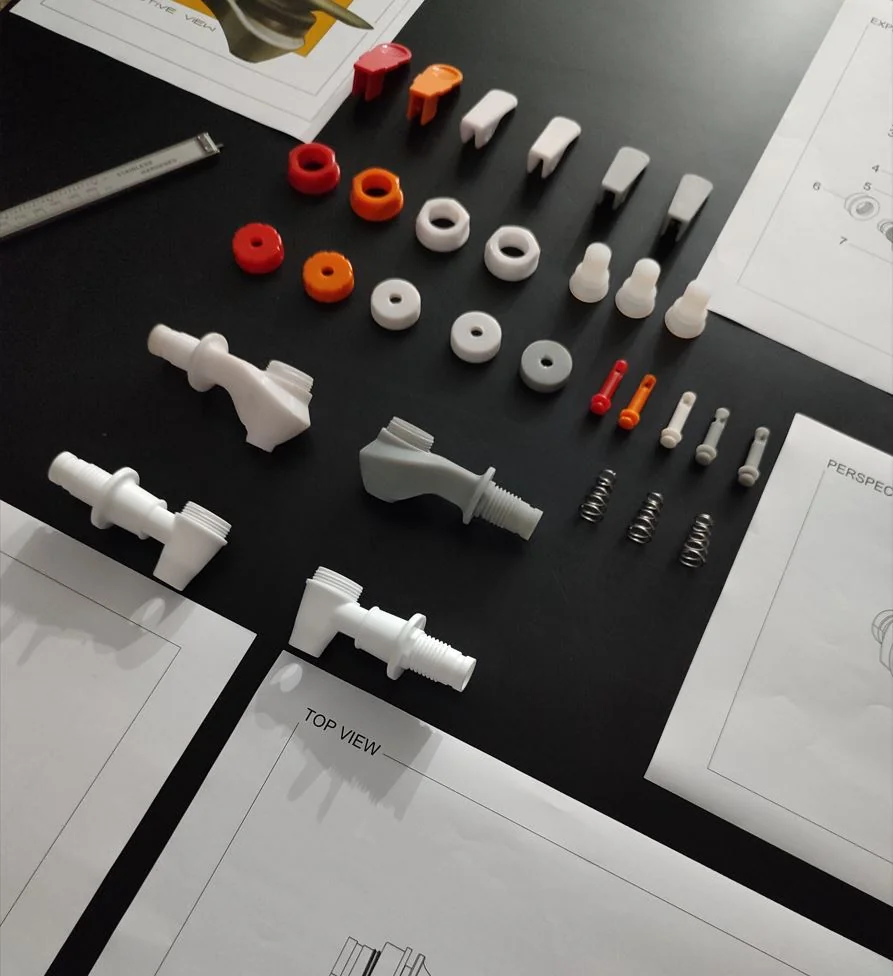
What's inside the mechanism
Mechanism
- Flat lever over a ribbed locking collar
- Spring-loaded compression valve stem
- Rubber gaskets for a positive, drip-free seal
Materials
- Injection-moulded plastic body and lever
- Stainless spring
- Rubber gasket seals
Process
- Ideation through three distinct concept directions
- Colourway testing before finish lock
- 3D-printed, caliper-checked, fit-tested prototypes
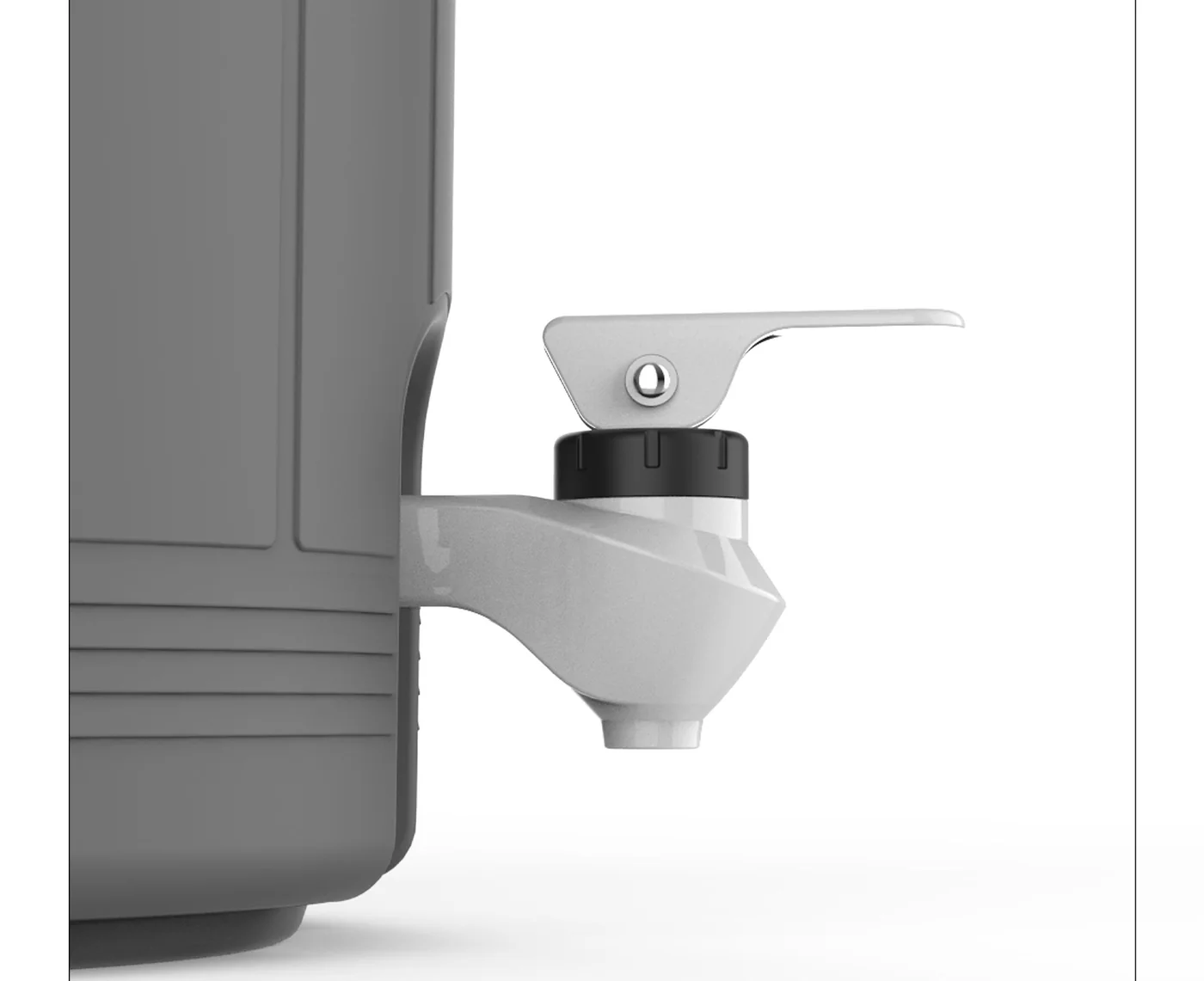
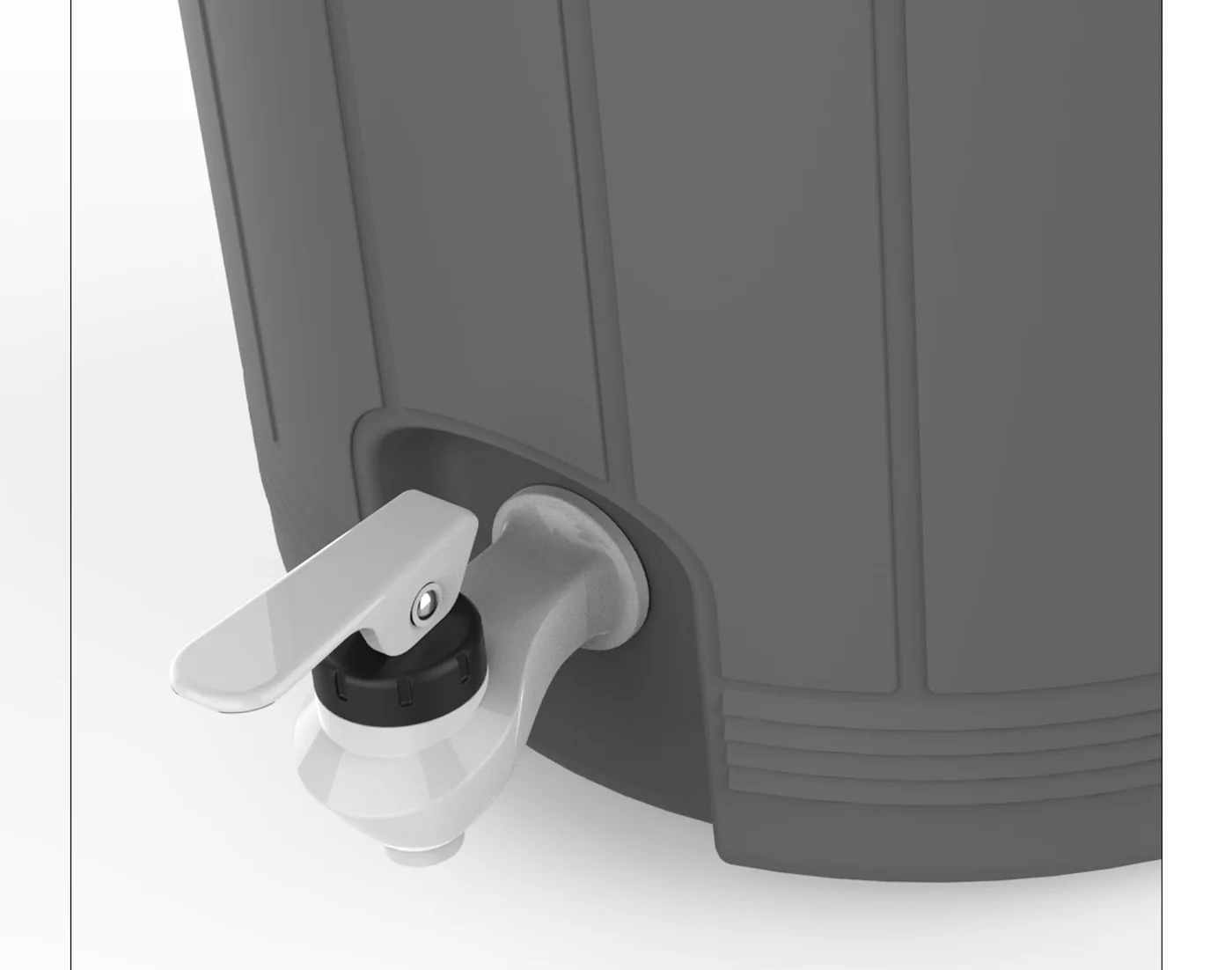
The finished mechanism
Questions About Sweep
Sweep is a redesigned tap for a water dispenser container, the kind of spigot fitted to a cooler-style water jug, taken from ideation sketches through three concept directions to a validated, production-ready mechanism.
Most dispenser taps are treated as an afterthought: a loose, drippy valve bolted onto the container with no real attention to grip, seal or how it looks. Sweep focused on the same three things a bathroom tap gets held to: a positive shutoff, quiet operation, and a form worth looking at.
Coffer Studios took the project from ideation sketches through three distinct concept directions, refined the strongest one, tested it across colourways, and validated it with 3D-printed prototypes checked against an exploded-view spec and fit-tested on a real dispenser container.
An injection-moulded plastic body around a compression valve, a spring-loaded stem and rubber gaskets giving the lever a positive close, the same category of mechanism, just resolved with real design attention, that most drink-dispenser taps skip.
More from the studio

Related reading
What Is CMF Design and Why It Decides Whether Your Product Looks Cheap or Premium
CMF design decides whether your product reads as premium or cheap before a customer touches it. Here's what colour, material and finish actually involve.
The Prototype Mistake That Costs Founders $20,000 (And How to Avoid It)
The most expensive prototyping mistake isn't skipping a prototype, it's prototyping in a way that doesn't match production. Here's how to avoid it.
From Sketch to Shelf: What a Full Product Development Process Actually Looks Like
Publishing soon.
Colour, Material, Finish: The Brief Your Manufacturer Actually Needs to Get It Right
Publishing soon.
What to Put on Your Product Before It Goes to Market: Surface and Print Design for Houseware Brands
Publishing soon.
Have A Product Like This?
We respond to every serious enquiry within one business day.